Dates provide a wide range of essential nutrients, and are a very good source of dietary potassium. The sugar content of ripe dates is about 80%; the remainder consists of protein, fiber, and trace elements including boron, cobalt, copper, fluorine, magnesium, manganese, selenium, and zinc.
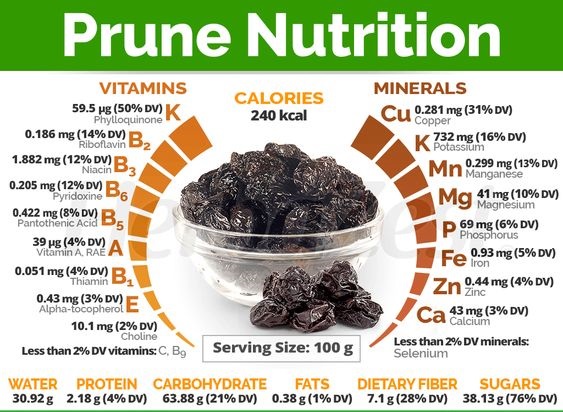
Prunes, known for their deep and shriveled skin, are actually a dried version of the plum.
Per half-cup serving, prunes contain about 6 grams of dietary fiber—which our bodies rely on for healthy bowel movements. To put that in perspective: The National Academy of Medicine recommends women consume about 25 grams of dietary fiber a day, and men, 38 grams daily.
There are other properties that make prunes exceptional in relieving constipation. Fructose and sorbitol, sugars and sugar alcohols found in the fruit, often produce a laxative-like effect on digestion, making it a bit easier to go.
Because of their sweet flavor and well-known mild laxative effect, prunes are considered to be an epitome of functional foods, but the understanding of their mode of action is still unclear. Dried prunes contain approximately 6.1 g of dietary fiber per 100 g, while prune juice is devoid of fiber due to filtration before bottling. The laxative action of both prune and prune juice could be explained by their high sorbitol content (14.7 and 6.1 g/100 g, respectively). Prunes are good source of energy in the form of simple sugars, but do not mediate a rapid rise in blood sugar concentration, possibly because of high fiber, fructose, and sorbitol content. Prunes contain large amounts of phenolic compounds (184 mg/100 g), mainly as neochlorogenic and chlorogenic acids, which may aid in the laxative action and delay glucose absorption. Phenolic compounds in prunes had been found to inhibit human LDL oxidation in vitro, and thus might serve as preventive agents against chronic diseases, such as heart disease and cancer.
Additionally, high potassium content of prunes (745 mg/100 g) might be beneficial for cardiovascular health. Dried prunes are an important source of boron, which is postulated to play a role in prevention of osteoporosis. A serving of prunes (100 g) fulfills the daily requirement for boron (2 to 3 mg).
Bok choy is one of the best sources of potassium, which helps build muscle and keep blood pressure low. It's also packed with vitamin A, which strengthens the immune system by increasing white-blood-cell activity and the body's response to toxins.
How To Eat It: Chop up and braise the lower, white portion of the stems in chicken or vegetable broth and sesame oil. Add leaves after two minutes, and cook another one to two minutes.
Bok Choy With Green Garlic & Toasted Almonds
INGREDIENTS
2 tablespoon olive oil
1 bunch chopped green garlic, white and green parts
1 lb bok choy or other Asian green, rinsed, quartered and chopped (depending on size)
1/2 teaspoon sesame oil
Salt to taste
1/2 cup chopped almonds
PREPARATION
Heat olive oil in a large sauté pan on medium high heat.
Add garlic, then bok choy.
Sprinkle with sesame oil and salt.
Cover, and let the baby bok choy cook down for approximately 3 minutes.
(Like spinach, when cooked, the bok choy will wilt a bit.)
Remove cover. Lower heat, stir and let cook for a minute or two longer, until the bok choy is just tender.
Remove from heat.
In a heavy pan over medium heat, warm almonds.
Toss almonds regularly to prevent burning.
Remove from heat when browning lightly and fragrant.
Parsnips are native to Europe and Asia and were introduced to North America in the 17th century.
Health benefits of parsnips
Generally, parsnip contains more sugar than carrots, radish, turnips. It has calories (100 g provide 75 calories) comparable to that of some fruits like banana, and grapes. Nonetheless, its sweet, juicy root is rich in several health-benefiting phyto-nutrients, vitamins, minerals, and fiber.
It is one of the excellent sources of soluble and insoluble dietary fiber. 100 g root provides 4.9 mg or 13% of fiber. Adequate fiber in the diet helps reduce blood cholesterol levels, obesity and constipation conditions.
As in carrots and other members of apiaceae family vegetables, parsnip too contains many poly-acetylene anti-oxidants such as falcarinol, falcarindiol, panaxydiol, and methyl-falcarindiol.
Several research studies from scientists at University of Newcastle at Tyne found that these compounds have anti-inflammatory, anti-fungal, and anti-cancer function and offer protection from colon cancer and acute lymphoblastic leukemia (ALL).
Fresh roots are also good in vitamin C; provide about 17 mg or 28% of RDA. Vitamin C is a powerful water-soluble anti-oxidant, easily available to us from natural sources. It helps the body maintain healthy connective tissue, teeth, and gum. Its anti-oxidant property helps protect from diseases and cancers by scavenging harmful free radicals from the body.
Further, the root is rich in many B-complex groups of vitamins such as folic acid, vitamin B-6 (pyridoxine), thiamin, and pantothenic acid as well as vitamin K and vitamin E.
In addition, it also has healthy levels of minerals like iron, calcium, copper, potassium, manganese and phosphorus. Potassium is an important component of cell and body fluids that helps controlling heart rate and blood pressure by countering effects of sodium.
Nutrition Facts
Parsnips
Amount Per1 cup slices (133 g)
Calories100
% Daily Value*
Total Fat0.4 g
0%
Saturated fat 0.1 g
0%
Polyunsaturated fat 0.1 g
Monounsaturated fat 0.1 g
Cholesterol0 mg
0%
Sodium13 mg
0%
Potassium499 mg
14%
Total Carbohydrate24 g
8%
Dietary fiber 6 g
24%
Sugar 6 g
Protein1.6 g
3%
Vitamin A
0%
Vitamin C
37%
Calcium
4%
Iron
4%
Vitamin D
0%
Vitamin B-6
5%
Vitamin B-12
0%
Magnesium
9%
*Percent Daily Values are based on a 2,000 calorie diet.
Pears provide a very good source of fiber and are also a good source of vitamin B2, C, E, copper, and potassium. They also contain a significant amount of pectin, which is a water soluble fiber.
Pears are actually higher in pectin than apples. This makes them effective in helping to lower cholesterol levels and in toning the intestines.
Blood pressure: Pears have anti-oxidant and anti-carcinogen glutathione which help prevent high blood pressure and stroke.
Cancer prevention: The high vitamin C and copper content act as good anti-oxidants that protect cells from damages by free radicals.
Cholesterol: The high content of pectin in pears make it very useful in helping to lower cholesterol levels.
Colon health: When not juicing, eat the pear whole for its precious fiber that are highly beneficial for your colon health.
Constipation: The pectin in pears is diuretic and have a mild laxative effect. Drinking pear juice regularly helps regulate bowel movements.
Energy: You can get quick and natural source of energy from pear juice, due largely to its high amounts of fructose and glucose.
Fever: The cooling effect in pear is excellent in relieving fever. Best way to bring a fever down quickly is by drinking a big glass of pear juice.
Immune booster: The anti-oxidant nutrients in pears are critical in building up your immune system. Drink pear juice when you feel a cold coming.
Inflammation: Pear juice has an anti-inflammatory effect and helps relieve sufferers of much pain in various inflammatory conditions.
Osteoporosis: Pears contain high level of boron. Boron helps the body to retain calcium, thus prevents or retards osteoporosis.
Pregnancy: The high content of folate (folic acid) prevents neural tube defects in infants.
Shortness of breath: The summer heat may cause children to have shortness of breath with excessive phlegm. Drink pear juice during this period to help clear the phlegm.
Throat problem: The pears are in season during the summer for a reason. Drinking pear juice every morning and night helps to cool your body down during this time. It nourishes the throat and helps prevent throat problems.
Vocal chord: Boil two Chinese pear juice with some raw honey and drink warm. This is extremely healing for the throat and the vocal cord.
Fiber: Pears are an excellent source of natural dietary fiber. One pear will give you 24% of your recommended daily allowance of fiber. Fiber contains no calories, and is a necessary element of a healthy diet as it helps sustain blood sugar levels and promotes regularity.
Pectin is a type of soluble fiber that binds to fatty substances in the digestive tract and promotes their elimination. This seems to help lower blood cholesterol levels. Soluble fiber also helps regulate the body's use of sugars.
Studies indicate that diets high in fiber may reduce the risk of heart disease and certain types of cancer.
Pear Nutrition Facts
1 medium Calories102
% Daily Value*
Total fat0.2 g
0%
Saturated fat 0 g
0%
Polyunsaturated fat 0.2 g
Monounsaturated fat 0.2 g
Cholesterol0 mg
0%
Sodium2 mg
0%
Potassium206 mg
5%
Total Carbohydrate27 g
9%
Dietary fiber 6 g
24%
Sugar 17 g
Protein0.6 g
1%
Vitamin A
0%
Vitamin C
12%
Calcium
1%
Iron
1%
Vitamin B-6
5%
Vitamin B-12
0%
Magnesium
3%
*Percent Daily Values are based on a 2,000 calorie diet. Your daily values may be higher or lower depending on your calorie needs.
Pears fruit is packed with health benefiting nutrients such as dietary fiber, anti-oxidants, minerals and vitamins, which are necessary for optimum health. Total measured antioxidant strength (ORAC value) in the fruit is 2941 µmol TE/100 g.
Pears are a good source of dietary fiber. 100 g fruit provides 3.1 g or 8% of fiber per 100g. Regular eating of this fruit may offer protection against colon cancer. Most of the fiber in them is non soluble polysaccharide (NSP), which functions as a good bulk laxative in the gut. Additionally, the gritty fiber content binds to cancer-causing toxins and chemicals in the colon, protecting its mucous membrane from contact with these compounds.
In addition, pear fruit is one of the very low calorie fruits, provides 58 calories per 100g. Just a few sections a day in the diet can bring significant reduction in weight and blood LDL cholesterol levels.
They contain good quantities of vitamin C. Fresh fruits provide about 7% of RDA per 100 g.
They are moderate sources of antioxidant flavonoids phyto-nutrients such as beta-carotene, lutein and zea-xanthin. These compounds, along with vitamin C and A, help the body protected from harmful free radicals.
The fruit is a good source of minerals such as copper, iron, potassium, manganese and magnesium as well as B-complex vitamins such as folates, riboflavin and pyridoxine (vitamin B-6).
Although not well documented, pears are among the least allergenic of all fruits and are therefore recommended by health practitioners as a safe alternative in the preparation of food products for allergy sufferers.
Pears have suggested in various traditional medicines being useful in treating colitis, chronic gallbladder disorders, arthritis and gout.
Digestive Benefits
One medium-sized pear contains 5.5 grams of fiber toward your daily goal of 21 to 38 grams. When you eat plenty of fiber, your digestive system works the way it's supposed to. Fiber helps your body absorb the vitamins and minerals from your food. It also helps prevent and relieve constipation and can keep you from developing painful hemorrhoids as well.
Nutritional Benefits
A medium-sized pear supplies 212 milligrams of potassium. Potassium is a mineral that helps your heart beat normally and keeps your muscles working the way they are supposed to. The same pear contains 7.5 milligrams of vitamin C, which is about 10 percent of your daily needs. Vitamin C helps prevent infection and keeps your immune system strong. Pears also supply a good dose of vitamin K to help clot your blood, as well as vitamin A for your eyes.
Health Benefits
The fiber in a pear helps keep your heart healthy and might reduce your risk of certain types of cancer as well. A pear a day might also keep you from having a stroke. A 2011 article published by the American Heart Association reports that eating one pear a day can reduce your risk of stroke by as much as 52 percent. Pears might also cut your risk of dying from heart disease. A 2007 article published in the "American Journal of Clinical Nutrition" notes that the flavonoids in pears might lower your risk of heart disease, as well as death associated with heart disease.
Celeriac, also called turnip-rooted celery or knob celery, is a variety of celery cultivated for its edible roots, hypocotyl, and shoots; these are sometimes collectively called celery root.
Though popular in Europe, this hearty, delicious root vegetable is hard to come by in the United States. That's a shame, because it makes for a great seasonal alternative to the potato in the winter, and is an excellent source of dietary fiber. Celeriac is also noteworthy among root vegetables in that it contains very little starch. So those looking to cut the starch from their diet can still enjoy all those "potato snacks" by replacing the potato with celeriac.
In Season: Celery root, also called celeriac, is harvested in the late fall. This ugly duckling has a distinct, refreshing flavor reminiscent of a cross between celery and parsley. The green stalks that sprout from the root aren't for snacking -- they're more pungent and not as crisp as regular celery -- but are wonderful simmered in soup or stock. Celery root stores well at cool temperatures, so it's available throughout the winter. Some markets carry it year-round.
Celeriac Nutrition Facts
Amount Per1 cup (156 g)
Calories66
% Daily Value*
Total fat0.5 g
0%
Saturated fat 0.1 g
0%
Polyunsaturated fat 0.2 g
Monounsaturated fat 0.1 g
Cholesterol0 mg
0%
Sodium156 mg
6%
Potassium468 mg
13%
Total Carbohydrate14 g
4%
Dietary fiber 2.8 g
11%
Sugar 2.5 g
Protein2.3 g
4%
Vitamin A
0%
Vitamin C
20%
Calcium
6%
Iron
6%
Vitamin B-6
15%
Vitamin B-12
0%
Magnesium
7%
*Percent Daily Values are based on a 2,000 calorie diet. Your daily values may be higher or lower depending on your calorie needs.
One cup of sweet cherries has just 90 calories and is a good source of fiber and vitamin C. With these great attributes, it’s no wonder why many nutritionists, dietitians, and other health professionals often refer to cherries as a superfood.
Cherries and Antioxidants:
Did you know that cherries rank among the top 20 foods with the highest concentration of antioxidants. In fact, the standard one-cup serving of cherries has the capacity to carry 4,873 antioxidants! Antioxidants are substances found in foods that may protect cells from damage caused by unstable molecules, known as free radicals. Cherries are especially rich in a phytochemical called anthocyanin. They also contain melatonin, phenols and quercetin.
Cherries and Melatonin:
There are many instances in life when your sleep patterns are disrupted. Whether it is expected jet lag or an ongoing sleep disorder, fresh cherries and the melatonin they contain can be an ally for you! Melatonin is a naturally occurring hormone produced by the pineal gland in the brain. It plays a key role in regulating the body’s internal clock and helps determine when we fall asleep and when we wake up. Eating a handful of cherries just before bed is a great way to naturally regulate your sleep cycle.
Cherries, Arthritis and Pain Relief:
Great news for arthritis sufferers! A bowl full of cherries may help alleviate pain and inflammation associated with arthritis and gout, the most severe form of arthritis. A gout attack occurs when excessive amounts of uric acid (waste product found in the blood) accumulate in the joints, and cause inflammation and pain.
Back in 2004, researchers from the Agriculture Research Service and University of California-Davis teamed up to study the effects consuming cherries could have on reducing pains caused by gout. They found that participants who ate 45 sweet cherries during breakfast significantly decreased their blood plasma levels while simultaneously increasing the amount of uric acid removed through urine. According to the researchers, these two changes are signs of a healthy immune system fighting inflammation.
Cherries and Heart Health:
Cardiovascular disease, or heart disease, is the single leading cause of death in America. One of the many health benefits of cherries is that they contain powerful antioxidants called anthocyanins, which may reduce a person’s risk of developing cardiovascular disease.
Just like red wine, anthocyanins give cherries their deep red color and also protect cells from damage during an interaction with oxygen. This important process also serves to protect the heart and surrounding tissue, inhibit plaque formation and reduce inflammation.
Balance your blood pressure:
Sweet cherries are loaded with potassium, a natural blood-pressure reducer. Potassium balances fluids in our bodies, essentially offsetting the blood-pressure-raising effects of sodium. So it’s no wonder studies have found that people who eat more potassium-rich foods, like sweet cherries, tend to have less hypertension. One cup of these ruby gems packs roughly the same amount of potassium as a small banana and also boasts some quercetin, an antioxidant that may help keep blood vessels relaxed and supple.
Cherries and Brain Health:
Cherries are one of the few foods that contain melatonin. In addition to helping regulate sleep patterns, melatonin is an important antioxidant that helps maintain optimum brain functioning and may deter the onset of age-related chronic diseases like Alzheimer’s. Research also suggests that the anthocyanins found in cherries further protect neural cells and promote brain health.
Combat cancer.
Sweet cherries are rich in beta carotene, vitamin C, anthocyanins and quercetin, which may work together synergistically to fight cancer. Plus, preliminary studies suggest the anthocyanin cyanidin may prevent genetic mutations that can lead to cancer and keep cancer cells from growing out of control. While tart cherries contain some anthocyanins, sweet cherries pack nearly three times as many (two-thirds are found in the skins). The riper the better: as cherries darken, they produce more antioxidants.
Red Cherries Nutrition Facts
Amount Per1 cup, without pits (155 g)
Calories77
% Daily Value*
Total fat0.5 g
0%
Saturated fat 0.1 g
0%
Polyunsaturated fat 0.1 g
Monounsaturated fat 0.1 g
Cholesterol0 mg
0%
Sodium5 mg
0%
Potassium268 mg
7%
Total Carbohydrate19 g
6%
Dietary fiber 2.5 g
10%
Sugar 13 g
Protein1.6 g
3%
Vitamin A
39%
Vitamin C
25%
Calcium
2%
Iron
2%
Vitamin B-6
5%
Vitamin B-12
0%
Magnesium
3%
*Percent Daily Values are based on a 2,000 calorie diet. Your daily values may be higher or lower depending on your calorie needs.